
There is no doubt that the globalisation of sport has had an impact on the engagement that sports teams have with their fans. The English Premier League is one of the most popular and well known sporting competition around the world. The global spread of the Premier League can be connected to media, previously of television, however now and more recently social media has a great impact in the global popularity of the Premier League (Menary, 2016). New media outlets such as YouTube now possess the ability to broadcast popular sporting events worldwide such as the Champions League final in 2018 which was live streamed worldwide to millions (Gratton et al., 2016). However it cannot be underestimated the role that television broadcasting has played with the globalisation of the Premier League with 212 countries around the world broadcasting Premier League matches such as NBC in the USA (Gratton et al., 2016).

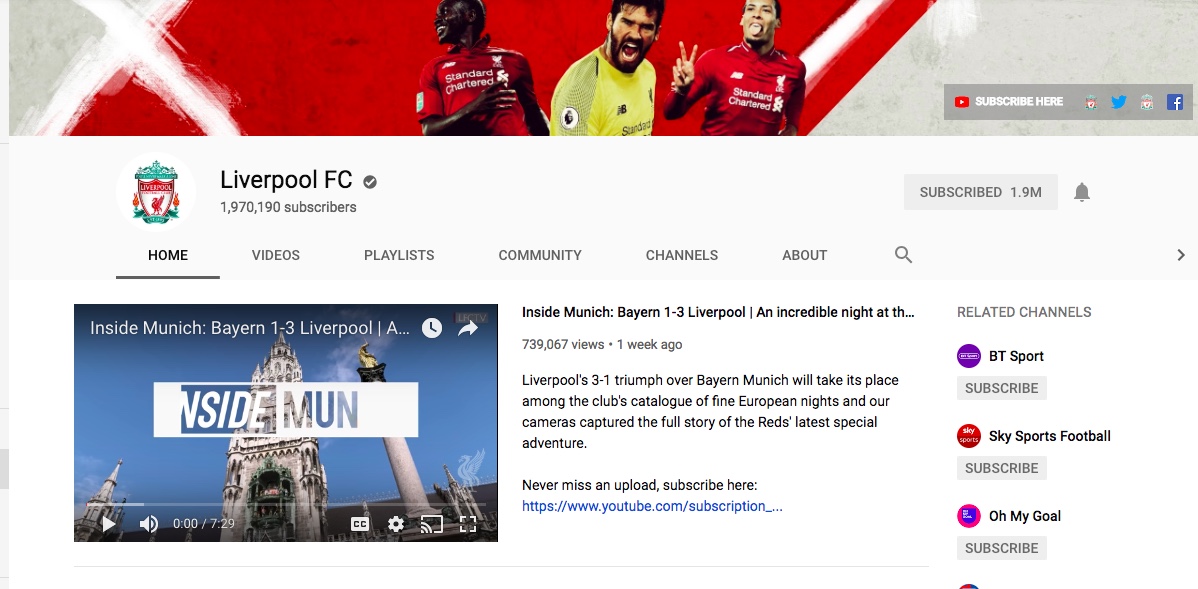
Traditional media such as television was an important factor to the globalisation of football and clubs being able have increased revenue due to tv deals and gate receipts, however, new media forms such as social media must be credited for the ability for fans all over the world to be able to engage with the football clubs they love and support. Football clubs such as Liverpool create various twitter accounts for different countries, where the tweets and content posted is in the language of that region, such as @LFCBrasil, @LFCIndonesia, @LFCMumbai and @ThaiLFC. There are many other official Liverpool accounts all over the world. Liverpool FC understand that engaging with their fans can be a critical contributer to both the development of the club and sport as well as bring commercial success (Stander et al., 2016). Sports fans and Liverpool fans all over the world are very loyal and passionate, once the fan has bonded with the team, the connection they have is very powerful and long-lasting, therefore fan engagement is critical in order to secure this strong bond (Conrad, 2016).

Through the use of creating various Liverpool twitter accounts, sports fans from that area are able to engage with Liverpool Fc and other fans from their country, somewhat creating a community through engagement. This is vital as even though some fans are incredibly far away from Anfield, they are still able to feel part of the fan base and have a sense of belonging at Liverpool Fc. Liverpool use all of their various social media accounts to increase interactions and engagements with their fans about the team as well as current and upcoming fixtures (Parganas & Anagnostopoulos, 2015). The advantages of social media was recognised by Liverpool in that there was a benefit in communicating and nurturing relationships with its worldwide fan base. A customer-focused strategy through the use of social media had been adopted, which accounts for differences in terms of both culture and language regarding the fan base (Parganas & Anagnostopoulos, 2015: 71). It is vital that Liverpool continue to use social media to engage with their fans worldwide as it is highly beneficial and rewarding to fans as new media allow fans to extend their fanship in different and meaningful ways. Newer media complement and supplement traditional media as fans are able to watch matches live while engaging in chat and communications with other fans from all over the world, discussing events happening in the game (Gantz & Lewis, 2014).

Due to fan engagement and globalisation of Premier League clubs such as Liverpool, there is a huge demand for Clubs to travel the world playing fixtures. To make many fans dream of seeing their club play live, many top football teams compete in pre-season competitions all over the world. Traditional media forms such as television has driven and increased the global popularity of both football itself and football clubs such as Liverpool (Gratton et al., 2016). Prior to traditional media forms such as television and radio, football was a declining industry, thankfully due to fan engagement through television and radio, the Premier League is now broadcast in 212 countries live around the world (Gratton et al., 2016).

Due to the amount of Premier League fans worldwide thanks to television as well as social media, TV rights have made the Premier League the richest league in the world. A massive factor in the escalation of the value is Pre-season tours (Menary, 2016). Pre-season tours allow supporters clubs and communities from all over the world to watch and support their favourite team in their own country, as well as being able to engage with the club such as Liverpool fans signing You’ll Never Walk Alone, or the club holding an open training session where fans are able to meet their idols, get autographs and pictures with them. Due to the use of social media as a way for clubs to engage with their fans all over the world, this can lead to the fans increased intention to engage in a beneficial way to the club, such as attending future games and buying merchandise (Hedlund, 2014).





 Anfield's Engagement